Moving day brings enough stress on its own. Add a collection of glassware, artwork, antiques, or electronics to the mix, and the stakes get significantly higher. Moving fragile items requires more than a few sheets of bubble wrap. It takes the right materials, the right technique, and a plan that accounts for every step from packing to unloading. Whether you are handling it yourself or working with professionals, this guide covers what you need to know to protect your most delicate belongings.
Start With the Right Packing Materials
The supplies you choose make a major difference when moving fragile items. Using undersized boxes or insufficient cushioning is one of the most common reasons things break in transit.
Stock up on the following before you begin:
- Double-walled cardboard boxes in multiple sizes
- Bubble wrap for wrapping individual items
- Packing paper or newsprint for filling empty space
- Foam pouches for stemware and small figurines
- Packing tape rated for heavy use
- Dish pack or cell divider inserts for glasses and plates
Avoid using old or damaged boxes. Weak seams and soft corners are a major liability when stacking heavy loads in a truck.
How to Pack Fragile Items Correctly
Technique matters just as much as materials when moving fragile items. A few principles apply across nearly every category of breakable item.
Wrap each piece individually before placing it in a box. Never let two unwrapped items touch each other, even if they seem sturdy. Line the bottom of every box with at least two to three inches of cushioning before placing anything inside, and fill any gaps around the items so they cannot shift during transport.
For dishes, pack them vertically like records rather than stacking them flat. Stacked dishes place weight directly on the surface below, increasing the risk of cracking. For glasses and stemware, stuff the interior with packing paper before wrapping the outside.
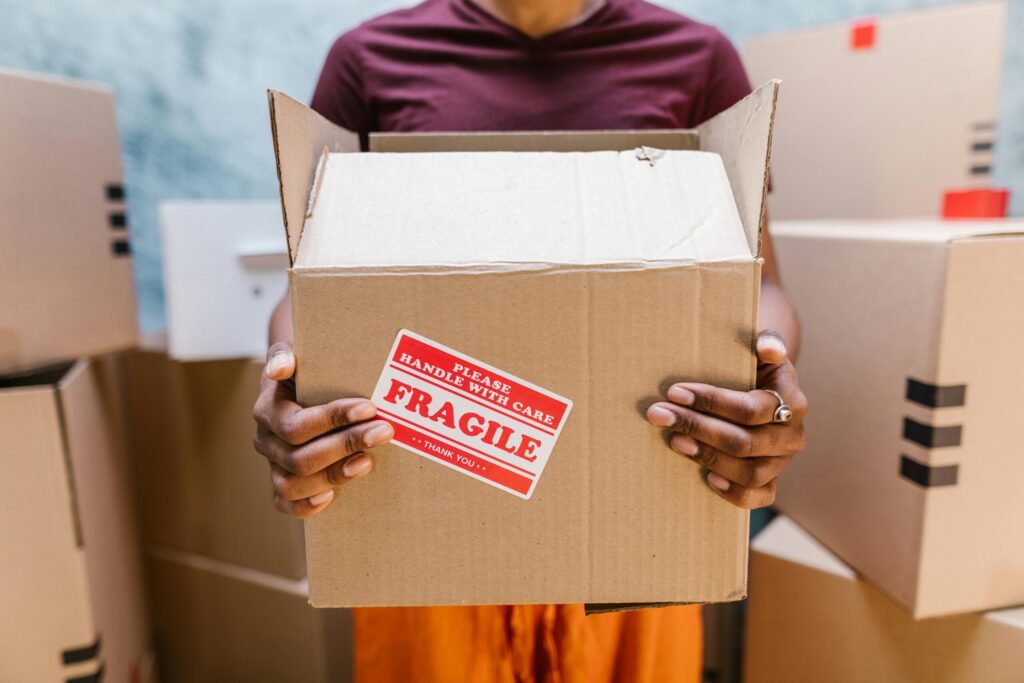
Label every box containing fragile items clearly on all four sides and on top. Do not rely on a single marking. If a box ends up turned on its side, you want the warning visible from every angle.
According to the American Moving and Storage Association, damaged goods claims are most commonly tied to improper packing rather than mishandling by movers, which means preparation is the single most important factor in protecting your belongings.
Fragile Items That Need Special Attention
Some categories of breakables require extra planning beyond standard wrapping.
- Artwork and mirrors: Use corner protectors and custom flat boxes or mirror cartons. Never wrap directly in bubble wrap without a layer of packing paper first, as the texture can damage certain finishes.
- Electronics: Use original packaging when available. If not, wrap components individually and secure cables separately to prevent them from pressing against screens or surfaces.
- Antiques and collectibles: Consider whether insurance coverage is appropriate before the move, and document condition with photos beforehand.
When in Doubt, Leave It to the Professionals
Some items are simply too valuable or too complex to risk without experienced help. Our packing services and supplies take the guesswork out of moving fragile items, with trained packers who know how to protect everything from fine china to large mirrors.
For particularly oversized or unconventional pieces, our specialty moving services are designed for items that do not fit neatly into a standard moving plan.
Let Mike Hammer Moving Handle the Delicate Work
Moving fragile items does not have to mean holding your breath until the truck arrives. With the right preparation and the right team behind you, your breakables can arrive in the same condition they left.
Contact us today to get a free quote and learn how Mike Hammer Moving protects what matters most.