By Michael Hammer | Mike Hammer Moving
Vending Machine Movers: Preparation Checklist and Questions to Ask Before You Book
Table of Contents
Key Takeaways
- A vending machine move requires measuring the unit against every opening on its route, emptying removable components, and protecting floors and door frames before the lift begins.
- A safe vending machine relocation hinges on pre-move documentation, a clear written split of disconnection duties, and keeping the unit upright unless the maker directs otherwise.
- Schedule trained professionals for heavy, refrigerated, or hard-to-access vending machine moves, and share measurements plus access details up front so the estimate reflects the real job.
What Do Vending Machine Movers Do?
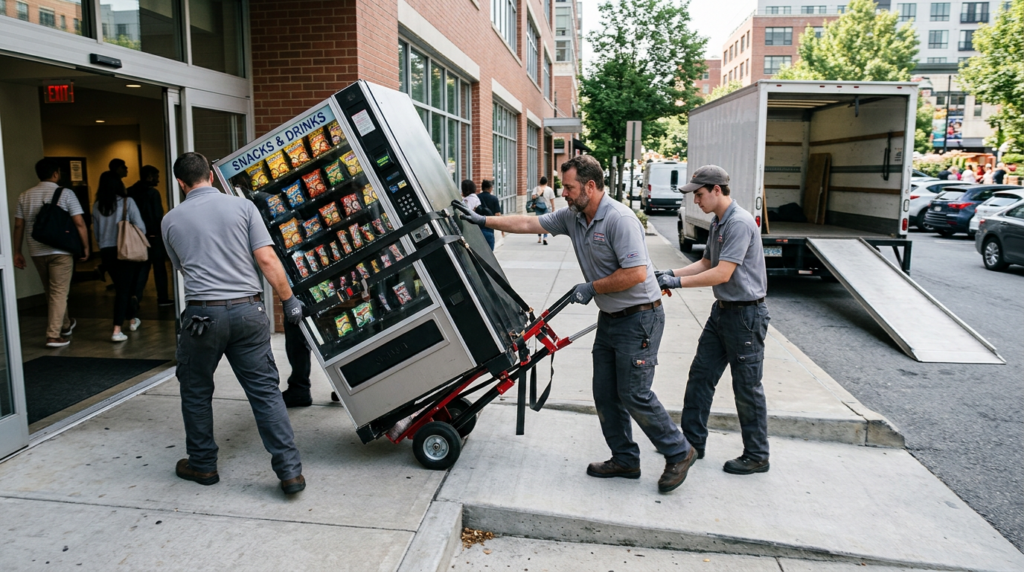
Vending machine movers are specialized crews that plan, lift, load, transport, and place large vending units too heavy, awkward, or delicate for ordinary hand-carry moving. A typical job calls for appliance dollies, lift gates, ratchet straps, floor protection, and careful route planning through doorways, hallways, and loading areas.
The scope of a vending machine move goes well beyond loading a truck. Before anything is lifted, the crew measures the unit's height, width, and depth, then compares those numbers against every doorway, hallway, elevator, and loading dock on the route. A full-size glass-front vendor can stand 72 inches tall and weigh more than 600 pounds empty, so even a few inches of clearance can determine whether the machine passes through or has to be tilted, partially disassembled, or rerouted.
Preparation also means lightening the load. Much like hiring piano movers for a grand instrument, a vending relocation rewards crews who understand weight distribution and fragile components. Commercial movers with trained, uniformed staff, such as Mike Hammer Moving's commercial moving crew, bring purpose-built equipment to each job, which helps business owners avoid downtime and property damage.
- Measure the machine's height, width, and depth, then check every doorway, hallway, elevator cab, and loading area along the planned route for clearance.
- Empty all products, coins, and removable parts such as bill validators, coin mechanisms, and trays when the owner or vendor gives permission, reducing both weight and the risk of internal damage.
- Disconnect power and any water or gas lines before the move, following the manufacturer's shutdown procedure.
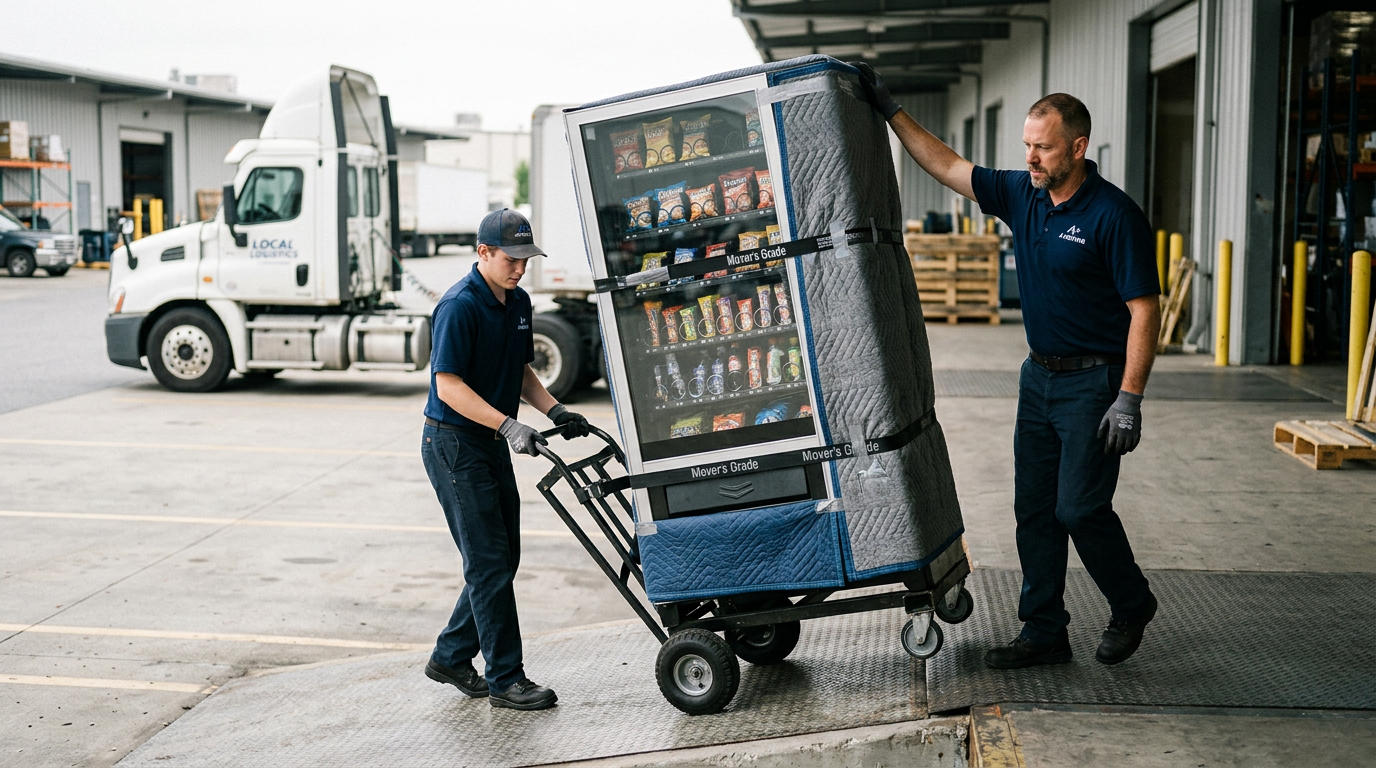
- Protect floors with runners or heavy cardboard, pad door frames with corner guards, and wrap the cabinet in moving blankets to prevent scratches and dents.
- Use appliance dollies, lift gates, ratchet straps, and, for very heavy units, air-bearing movers rated for loads up to 1,400 pounds.
- Plan controlled, slow turns at tight corners so the tall cabinet does not tip or strike walls, and consider heavy item movers when the unit exceeds what a standard dolly can handle.
Measure Twice, Move Once
- Before scheduling a vending machine move, measure the unit and every opening on its path. A standard glass-front vendor is roughly 72 inches tall and 33 to 47 inches wide, while many interior doorways are only 34 inches across. If the machine and the doorway are within a few inches of each other, plan for a tilt, a partial teardown, or an alternate route rather than forcing the cabinet through.
|
Machine or Equipment |
Weight Specification |
Dimensions |
Handling Consideration |
|---|---|---|---|
|
Can/bottle cooler ( RVCC-550-6 specs) |
536 lbs empty |
72 in. H x 31.5 in. W x 34.5 in. D |
UL 541 safety certified; 550-can capacity adds loaded weight |
|
Glass-front vendor ( GFV-400 spec sheet) |
635 lbs net, 668 lbs shipping |
72 in. H x 47.125 in. W x 33 in. D |
Fits standard 34 in. doorway; pallet jack transport |
|
Air-bearing mover ( Airsled Vending Mover) |
1,400 lb lift rating |
Air beams: 12 in. W x 39 in. L |
Rated for loads up to 35 in. deep; RSAs for carpet |
|
Handling standard ( ASTM D6055) |
6 methods (A through F) |
Fork truck, clamp, sling, push-pull |
Evaluates integrity and stability of unitized loads |
How Does a Vending Machine Move Work?
A typical vending machine move follows five stages: access checks, machine prep, safe loading, secure transport, and careful placement at the new site. The exact steps shift with stairs, tight turns, power connections, and machine type, and refrigerated drink machines may need extra time before they are plugged back in.
Before moving day, photograph the machine, its power cord, leveling feet, and the placement area so the crew has a clear reference. Confirm who is responsible for disconnecting power, water lines, card readers, or vendor-owned components, since those tasks often fall to the route operator rather than the moving crew. During handling, keep the machine upright unless the manufacturer gives different instructions, because tilting can stress compressors and coolant lines in refrigerated units.
OSHA notes that workers loading and unloading materials should be instructed in safe procedures appropriate to the material they handle, which is why experienced vending machine movers plan each lift around the machine's weight and footprint. A full-service moving plan can fold prep, transport, and placement into one coordinated schedule, and these tips for moving heavy items apply to any vending relocation.
Quick Facts
- 1987 – Family-owned and operated since
- All 50 states – Long-distance service coverage
- 100% – Satisfaction guarantee
- 12 trucks – Company-owned fleet
- 45 employees – Trained, uniformed staff
Ready for Specialized Moving Help?
Hire professional vending machine movers when your unit is heavy, refrigerated, or near stairs and tight turns. Mike Hammer Moving serves the Kansas City metro. Contact our team with photos, machine dimensions, and pickup and delivery access for a clear estimate and moving plan, and ask about specialty support for other heavy items. When the vending relocation is part of a whole-workplace move, our office moving services coordinate the full transition. Since 1987, our trained, uniformed crews have provided direct transport with no shared trucks, coordinating any oversize load permits your route requires.
Frequently Asked Questions About Vending Machine Movers
Do I need to empty a vending machine before movers pick it up?
Ask the vending operator first, because policies vary. Some operators want all product, coin boxes, and removable parts taken out before pickup to lower the weight and prevent spills, while others empty the machine themselves as part of the service call. Confirm the expectation in writing so no one disputes spoiled inventory or missing product on move day.
What access details should I check before scheduling the move?
Walk the full route at both locations and note every stair, curb, ramp, elevator, and loading dock along the way. Measure door widths and elevator cab depth, confirm the dock height lines up with the truck, and flag tight turns or low ceilings. Sharing these details when you request a quote lets Mike Hammer Moving plan staffing and equipment around your building instead of improvising on arrival.
How soon can a refrigerated vending machine be plugged back in?
Wait to reconnect refrigerated units until safe handling guidance for your specific model has been checked. Manufacturers and operators often call for a standing period after transport so compressor oil can settle, and moving a unit on its side can change that guidance. Our notes on keeping appliances upright and defrosted cover the same care a refrigerated cabinet needs before power goes back on.
What should I look for when choosing vending machine movers?
Look for a crew that asks detailed questions about weight, dimensions, and site access before quoting, and that carries specialty dollies, straps, and stair-climbing equipment. OSHA's loading and unloading guidance notes that workers who load and unload materials should be instructed in safe procedures appropriate to the material they handle, which is exactly the training a professional crew brings to a tall, top-heavy cabinet.
Who handles electrical disconnects and reconnection?
Most moving crews relocate the machine but do not perform electrical work, so confirm who is responsible for the disconnect and reconnection before scheduling. Hardwired units or 220-volt refrigerated cabinets may need a licensed electrician, and a vending operator can usually tell you whether the machine uses a standard plug or a dedicated circuit. Planning that step separately keeps move day from stalling while everyone waits on an electrician.
{
“@context”: “https://schema.org”,
“@type”: “FAQPage”,
“mainEntity”: [
{
“@type”: “Question”,
“name”: “Do I need to empty a vending machine before movers pick it up?”,
“acceptedAnswer”: {
“@type”: “Answer”,
“text”: “Ask the vending operator first, because policies vary. Some operators want all product, coin boxes, and removable parts taken out before pickup to lower the weight and prevent spills, while others empty the machine themselves as part of the service call. Confirm the expectation in writing so no one disputes spoiled inventory or missing product on move day.”
}
},
{
“@type”: “Question”,
“name”: “What access details should I check before scheduling the move?”,
“acceptedAnswer”: {
“@type”: “Answer”,
“text”: “Walk the full route at both locations and note every stair, curb, ramp, elevator, and loading dock along the way. Measure door widths and elevator cab depth, confirm the dock height lines up with the truck, and flag tight turns or low ceilings. Sharing these details when you request a quote lets Mike Hammer Moving plan staffing and equipment around your building instead of improvising on arrival.”
}
},
{
“@type”: “Question”,
“name”: “How soon can a refrigerated vending machine be plugged back in?”,
“acceptedAnswer”: {
“@type”: “Answer”,
“text”: “Wait to reconnect refrigerated units until safe handling guidance for your specific model has been checked. Manufacturers and operators often call for a standing period after transport so compressor oil can settle, and moving a unit on its side can change that guidance. Our notes on keeping appliances upright and defrosted cover the same care a refrigerated cabinet needs before power goes back on.”
}
},
{
“@type”: “Question”,
“name”: “What should I look for when choosing vending machine movers?”,
“acceptedAnswer”: {
“@type”: “Answer”,
“text”: “Look for a crew that asks detailed questions about weight, dimensions, and site access before quoting, and that carries specialty dollies, straps, and stair-climbing equipment. OSHA’s loading and unloading guidance notes that workers who load and unload materials should be instructed in safe procedures appropriate to the material they handle, which is exactly the training a professional crew brings to a tall, top-heavy cabinet.”
}
},
{
“@type”: “Question”,
“name”: “Who handles electrical disconnects and reconnection?”,
“acceptedAnswer”: {
“@type”: “Answer”,
“text”: “Most moving crews relocate the machine but do not perform electrical work, so confirm who is responsible for the disconnect and reconnection before scheduling. Hardwired units or 220-volt refrigerated cabinets may need a licensed electrician, and a vending operator can usually tell you whether the machine uses a standard plug or a dedicated circuit. Planning that step separately keeps move day from stalling while everyone waits on an electrician.”
}
}
]
}