Relocating to a new home means deciding what to do with your major appliances. Appliance moving requires special knowledge, equipment, and preparation that differs from moving regular household items. Refrigerators, washers, dryers, and stoves are heavy, awkward, and contain delicate components that can be damaged without proper handling. Understanding the essentials of appliance moving helps protect both your investment and your safety.
Why Appliance Moving Requires Special Care
Major appliances are among the heaviest and most challenging items to relocate. A standard refrigerator weighs between 200 and 400 pounds, while washing machines can exceed 250 pounds. According to LendingTree research, refrigerators caused over 427,000 emergency room visits between 2013 and 2022, making them the leading source of appliance-related injuries. Many of these injuries stem from improper lifting and moving techniques.
Beyond the weight, appliances contain sensitive mechanical and electrical components. Compressors, motors, drums, and heating elements can suffer damage if the appliance is tilted incorrectly or jostled during transport.
Preparing Your Appliances for the Move
Proper preparation prevents damage and makes appliance moving safer for everyone involved.
Refrigerators and Freezers
Start preparing your refrigerator at least 24 hours before moving day:
- Empty all contents and dispose of perishables
- Unplug and allow the unit to defrost completely
- Clean interior surfaces to prevent mold growth
- Remove or secure shelves and drawers
- Tape doors shut and secure power cords
Refrigerators must remain upright during transport. Laying them on their side allows compressor oil to flow into the cooling lines, potentially causing permanent damage.
Washing Machines
Washing machines require specific preparation:
- Disconnect water supply hoses and drain remaining water
- Install transit bolts to secure the drum (check your manual)
- Clean the detergent dispenser
- Leave the door slightly open to prevent mold
Failing to secure the drum with transit bolts can result in costly internal damage during transport.
Dryers
Dryer preparation is more straightforward but still essential:
- Unplug electric dryers or disconnect gas lines (hire a professional for gas connections)
- Disconnect and clean the vent hose
- Empty the lint trap thoroughly
- Tape the door closed
Gas dryers require a licensed technician to disconnect and reconnect the gas line safely.
Equipment Needed for Safe Transport
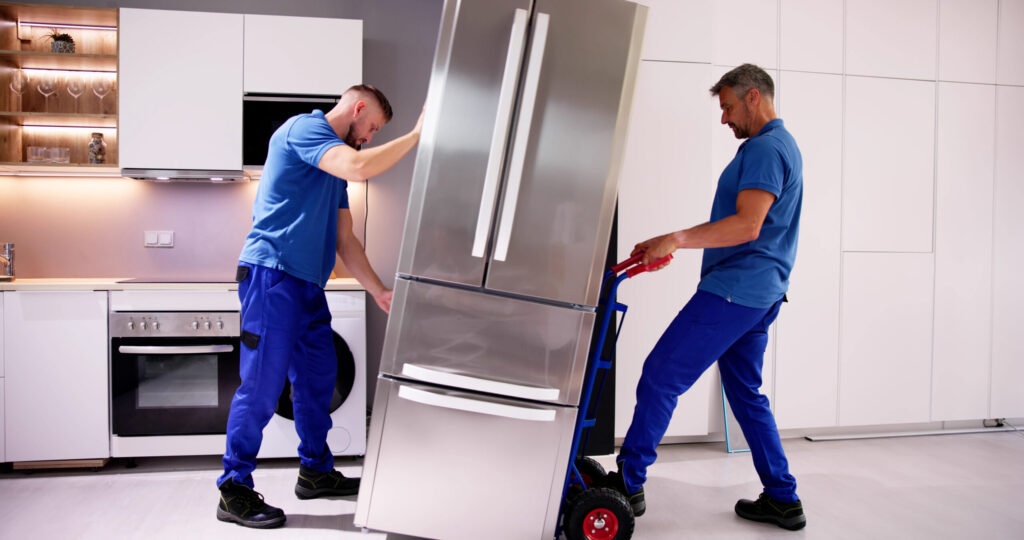
Moving heavy appliances without proper equipment invites injury and damage. Professional movers use:
- Appliance dollies with straps to secure units
- Furniture sliders to protect floors
- Moving blankets to prevent scratches and dents
- Ramps for loading into trucks
- Straps to secure appliances during transport
Attempting to muscle a refrigerator down stairs or across carpet without these tools puts your back, your floors, and your appliance at serious risk.
Benefits of Hiring Professional Movers for Appliances
Professional residential moving services bring experience and equipment that make appliance moving significantly safer. Trained movers understand the proper techniques for each appliance type. They know how to navigate tight doorways, stairs, and corners without damaging walls or the appliances themselves.
Professional movers also carry insurance that covers potential damage during transport. If something goes wrong with a DIY move, you bear the full cost of repairs or replacement.
Common Mistakes to Avoid
Many homeowners make preventable errors when handling these relocations themselves:
- Failing to measure doorways and pathways before moving day
- Not disconnecting water and power properly
- Tipping refrigerators on their side during transport
- Forgetting to secure loose parts like shelves and drawers
- Underestimating the weight and trying to lift alone
These mistakes lead to damaged appliances, injured backs, and scratched floors and walls.
Plan Your Move Today
Whether you are moving across town or across the state, relocating heavy appliances deserves careful planning and professional handling. Taking shortcuts with these heavy, expensive items rarely pays off.
Mike Hammer Moving has provided expert loading and unloading services for Kansas City families since 1987. Our trained crews have the equipment and experience to move your appliances safely and efficiently. Contact us today for a free quote and let our professionals handle your appliances with care.