
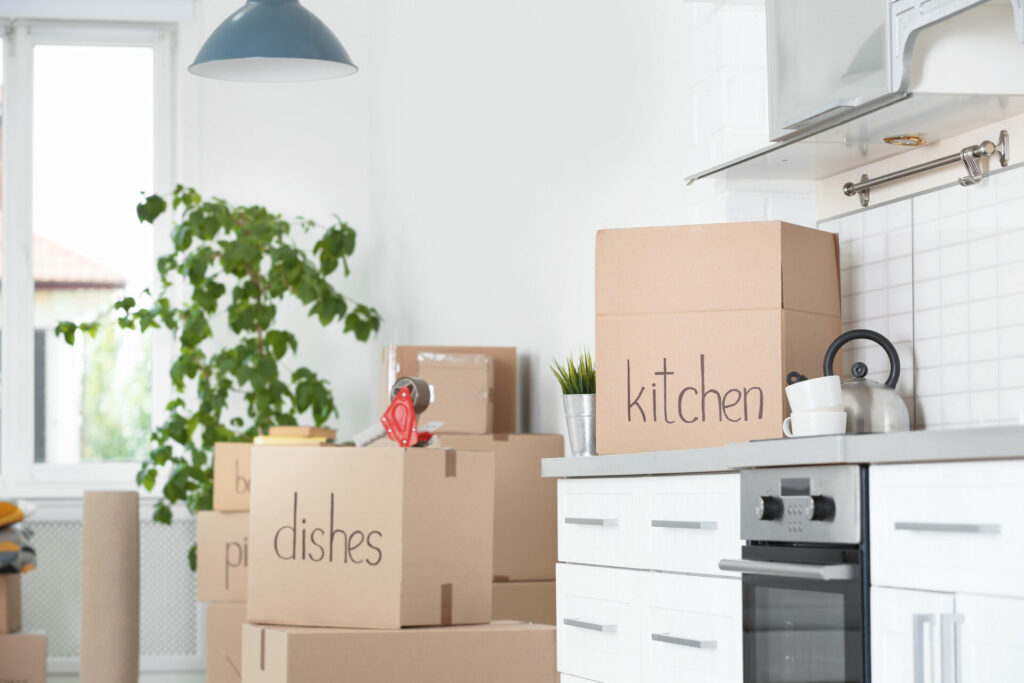
The kitchen is one of the most challenging rooms to pack when you are preparing for a move. Between fragile glassware, heavy cookware, and oddly shaped appliances, knowing how to pack kitchen items properly can mean the difference between everything arriving safely and opening a box of broken dishes. With the right approach, you can protect your belongings and make unpacking at your new home much easier.
Gather Your Packing Supplies First
Before you touch a single cabinet, make sure you have all the materials you need. Running out of supplies halfway through slows the process and tempts you to cut corners.
Stock up on these essentials:
- Small and medium boxes. Small boxes work best for heavy items like plates and bowls. Medium boxes are ideal for lighter items such as plastic containers and dry goods.
- Packing paper and bubble wrap. Packing paper is perfect for wrapping dishes, while bubble wrap provides extra cushioning for your most delicate glassware.
- Dish box dividers. Cardboard cell dividers let you separate glasses and stemware so they do not bump against each other.
- Packing tape and markers. Reinforce every box bottom with extra tape and label each box with its contents.
Having everything ready before you start keeps the packing process organized from beginning to end.
How to Pack Kitchen Items That Break Easily
Dishes, glasses, and ceramics account for some of the most common moving day casualties. According to the US Moving Association, roughly 1 in 4 moves involves some form of damage to belongings. Taking a few extra minutes with your fragile kitchen pieces can help you avoid becoming part of that statistic.
For plates and bowls, wrap each piece individually in packing paper and stack them vertically on their edges, similar to records in a crate. This position distributes pressure more evenly and reduces the chance of cracking. For glasses and stemware, stuff the inside of each glass with crumpled paper before wrapping the outside, then place them upright in a box with cell dividers.
Always line the bottom of every box with a thick layer of crumpled paper, and fill any remaining gaps at the top before sealing. If items can shift inside the box, they are not packed tightly enough.
Packing Pots, Pans, and Appliances
Once you know how to pack kitchen items that are fragile, the heavy stuff is next. Nest smaller pots inside larger ones and place a layer of packing paper or a kitchen towel between each piece to prevent scratching. Use small, sturdy boxes so the weight stays manageable.
For small appliances like blenders and toasters, remove any detachable parts and wrap them separately. Coil cords neatly and secure them with a rubber band. If you still have the original box, use it. Otherwise, wrap the item in bubble wrap and place it in a snug-fitting box with padding on all sides.
Set Aside an Essentials Box
Pack a clearly labeled “Open First” box with items you will need immediately at your new home. Include a few plates, cups, utensils, a dish towel, your coffee maker, and basic cleaning supplies. This small step saves you from digging through dozens of boxes on your first night.
Leave the Hard Work to the Pros
If your kitchen is large or packed with fragile heirlooms, professional packing and moving services can save you hours of work and worry. Experienced movers know how to pack kitchen items using the right techniques and materials to keep everything safe. They can also handle the heavy lifting involved in residential moves so you can focus on settling in.
Ready to take the stress out of your next move? Contact Mike Hammer Moving today for a free quote and let our Kansas City team pack and move your kitchen with care.