
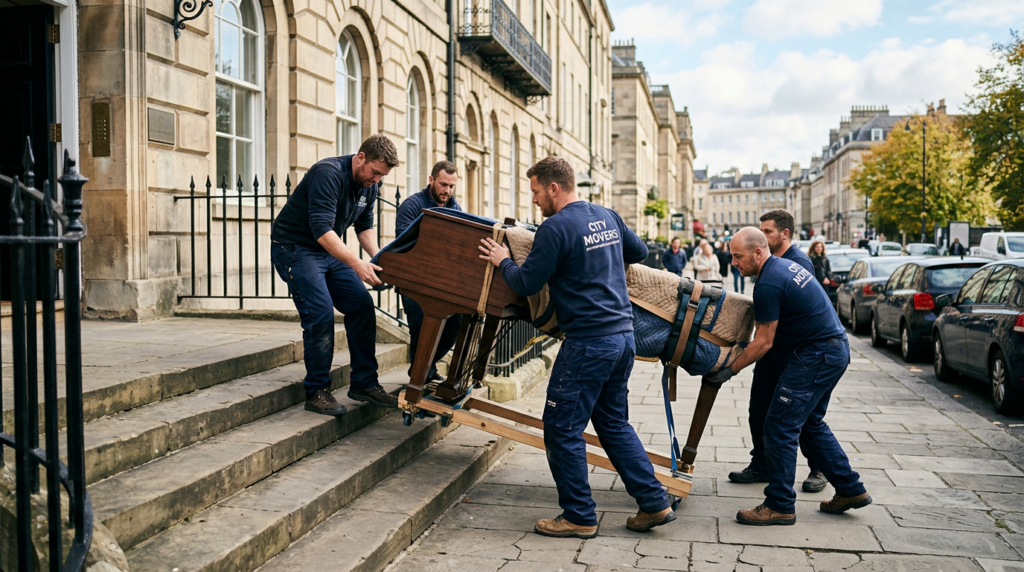
By Michael Hammer | Mike Hammer Moving
A Practical Guide to Hiring the Right Piano Movers
Table of Contents
Key Takeaways
- Because a piano can range from about 200 pounds for a spinet to 1,200 pounds for a concert grand, hiring specialists with the right dollies, straps, and crating protects both the instrument and your home.
- Hiring trained piano movers protects an instrument that can weigh up to 1,200 pounds and has an awkward center of gravity, turning a risky, stressful relocation into a controlled, predictable job.
- Unqualified piano movers typically reveal themselves through vague answers, missing specialty equipment, and unplanned routes, so asking direct questions about technique and gear before booking is the most effective way to prevent damage.
- Professional piano movers protect your instrument by following a measured, step-by-step process that accounts for the piano's concentrated weight, climate sensitivity, and the route through your home.
What Are Piano Movers, and When Should You Hire One?
Piano movers are relocation specialists who transport upright, baby grand, and concert grand pianos, using padded dollies, lifting straps, skid boards, and custom crating to shield the finish, strings, soundboard, and delicate action from the bumps and temperature swings of a move.
The work is demanding: a piano can weigh anywhere from 200 pounds for a spinet to 1,200 pounds for a concert grand, according to NerdWallet's moving guide, so the job calls for equipment and technique that standard household crews rarely carry. This guide explains what sets dedicated piano movers apart, how the process works, what shapes the cost, and how to vet a provider. Kansas City families have relied on Mike Hammer Moving for specialty moves like these since 1987. Knowing what to check before hiring the right mover, and how a dedicated piano moving team handles the job, can spare you costly damage and stress.
What Are Piano Movers and Why Do They Matter?
Piano movers are trained specialists who relocate upright and grand pianos using purpose-built dollies, skid boards, padding, and lifting straps, rather than treating the instrument like ordinary furniture. Because pianos can weigh anywhere from 200 pounds for a spinet to as much as 1,200 pounds for a concert grand piano, according to NerdWallet's piano guide, the work demands specific technique to protect both the instrument and your floors. This matters because a piano's awkward shape and unusual center of gravity make it easy to damage the cabinet, internal action, or surrounding walls during a careless move. For Kansas City families, seniors, and businesses, hiring experienced piano movers turns a high-stress, high-risk task into a controlled, predictable one. A family-owned provider such as Mike Hammer Moving pairs uniformed, trained crews with the right equipment, and our piano packing guide shows exactly how each instrument is wrapped and secured. If you are weighing the cost of piano moving in Kansas City, understanding what the service includes helps you compare estimates with confidence.
What Causes Piano Damage During Moves?
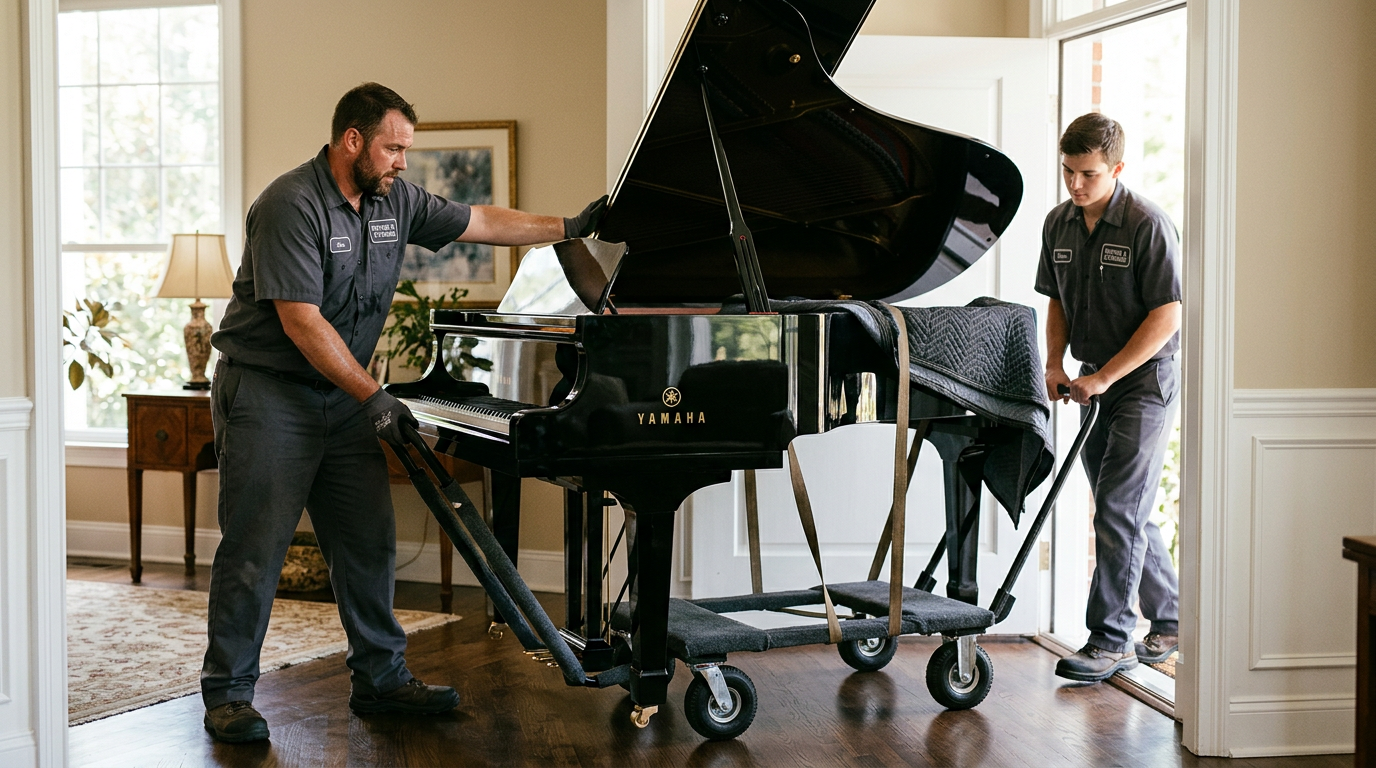
The warning signs of unqualified piano movers show up early: crews that treat the instrument like ordinary furniture, too few helpers for its concentrated weight, and routes never measured for stairs or doorways. Most piano damage happens for a handful of predictable reasons, and spotting these causes before moving day is the simplest way to protect a heavy, awkward, unforgiving instrument. According to A440 Pianos, the warning signs of rough handling can include a chipped cabinet corner, a leg stressed during handling, a finish scratched by an exposed buckle, or a pedal system that feels different after delivery.
At Mike Hammer Moving, we often see the aftermath of rushed or under-equipped moves, and the pattern is consistent. A piano is not just heavy; it carries a cast-iron plate, a soundboard, and strings under tension, so the weight sits in ways that shift unpredictably when the instrument is tipped or rolled incorrectly. When you work with Mike Hammer Moving, a trained, uniformed crew plans the route, brings piano-specific equipment, and protects both the instrument and your home. As a family-owned company operating since 1987, we provide local and long distance services to all 50 states, with dedicated attention across Kansas City, KS, and Kansas City, MO.
The most common causes are rarely mysterious. Inexperienced handling, the wrong equipment from general crews instead of dedicated heavy item movers, and an unplanned path account for most of the problems homeowners report. Choosing the right number of helpers matters just as much, since too few movers can force a crew to tip or drag the instrument. The sections below break down the single biggest risk factor and the practical step that helps you recognize unqualified piano movers before you commit.
Why Does Weight Distribution Matter Most?
Weight distribution is the single most important factor because a piano's mass is concentrated and uneven, not spread evenly like a sofa. An upright is top-heavy and can shift if tipped too far, while a grand creates leverage problems once its legs come off and it is secured to a board. Add stairs or a tight landing and the margin for error shrinks fast. Trained crews control these balance points with the right number of people and piano-specific rigging, not brute strength.
How Can You Spot Unqualified Movers?
The most practical step is to ask direct questions before you book. Find out whether the company moves pianos regularly or only occasionally, what equipment it uses, and how it handles stairs, sharp turns, and weather exposure. Qualified piano movers answer methodically and want details about your instrument and access points. Be wary of any crew that quotes blindly, minimizes the complexity, or cannot explain how it will protect the finish and internal parts. Willingness to load a piano is not the same as expertise.
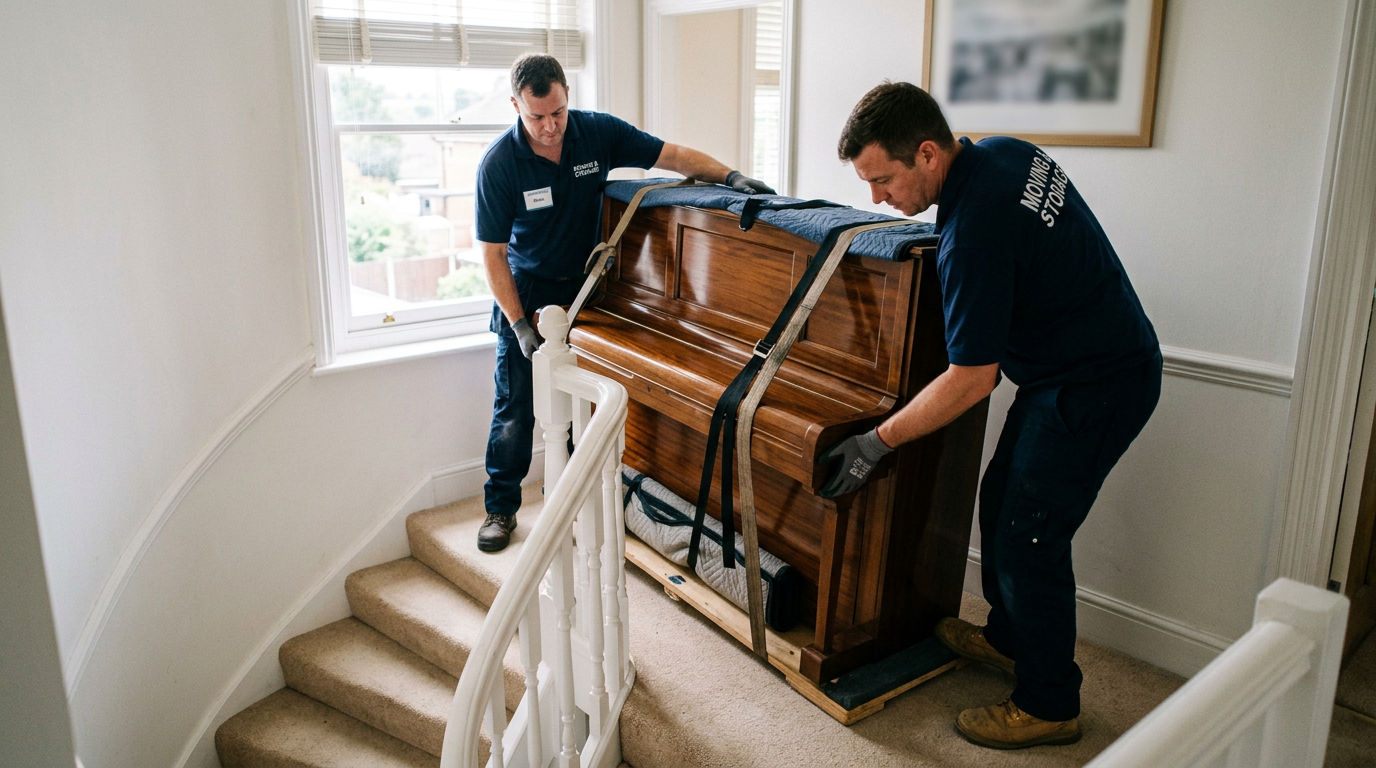
- Crews that treat the piano like ordinary furniture instead of a precision instrument
- Too few movers for the instrument's concentrated, top-heavy weight
- No piano-specific equipment such as skid boards, reinforced dollies, and heavy-duty straps
- An unplanned route that ignores stairs, tight turns, doorways, and weather exposure
- Subtle damage signs after delivery, such as a chipped corner, a stressed leg, a scratched finish, or a pedal system that feels different
- A mover that quotes blindly or cannot explain how it will protect the instrument
Rule of Thumb
- If a mover cannot explain exactly how it will protect your piano's finish, legs, pedals, and internal parts, treat that as a warning sign. Qualified piano movers plan the route and bring the right equipment before moving day, not after.
Piano Moving by the Numbers
- Since 1987 – Family-owned and operated
- All 50 states – Local and long distance service coverage
- Several hundred lbs – Typical upright piano weight
- Four-figure territory – Typical grand piano weight
How Does a Professional Piano Move Work?
Professional piano movers move your instrument through a planned, step-by-step process rather than simply lifting it onto a truck. A trained crew first inspects the route, measures doorways and stairways, and confirms the piano type, then pads the instrument, transfers it onto a dolly or skid board, secures it in the truck, and sets it in place at the destination. According to NerdWallet, transporting a piano generally involves 12 basic steps. Those steps run from gathering tools and taking measurements to wrapping the cabinet, loading the instrument with a ramp, and arranging a tuning after arrival.
The reason the process is so deliberate is the instrument itself. A piano carries concentrated, awkward weight, and NerdWallet notes that pianos can weigh anywhere from 200 pounds for a spinet to as much as 1,200 pounds for a concert grand piano. That mass shifts unpredictably on stairs or tight turns, so the crew controls balance points and uses heavy furniture moving techniques such as lifting straps, reinforced dollies, and moving blankets. For a grand, the team removes the legs and lid, secures the body to a board, and reassembles it on site. For an upright, movers manage the top-heavy cabinet while protecting pedals and corners.
Climate matters during the move, too. NerdWallet recommends keeping the piano's environment as close as possible to between 68 and 72 degrees Fahrenheit and 45% relative humidity. A methodical crew also protects your floors and walls along the path, an approach we outline in our guide to moving bulky items. This is why experienced piano movers plan each route before anything is lifted. At Mike Hammer Moving, trained, uniformed crews follow that discipline on every job, so the move feels controlled from the first measurement to the final placement.
Expert note
- Skilled piano movers follow the same deliberate sequence on every job, no matter the home. They measure the route first, pad and wrap the cabinet, transfer the instrument onto a dolly or skid board, secure it for transport, and reassemble it on site. Because a move can affect a piano's tuning, plan to have the instrument checked by a professional tuner after it settles into its new space.
What Are Your Options for Moving a Piano?
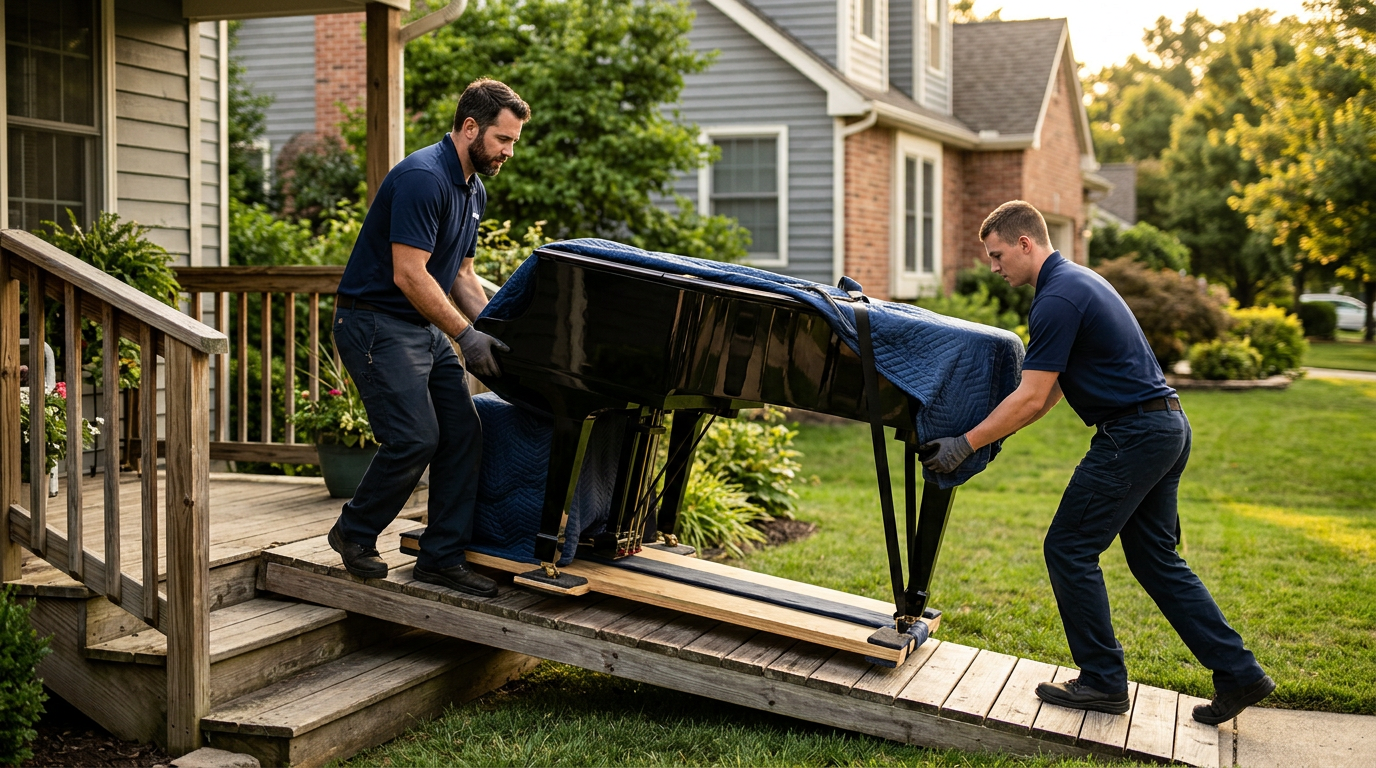
Compare your options before you book, because the right choice among piano movers depends on the instrument's value, weight, and the route it must travel. Homeowners generally weigh three paths. Dedicated piano movers handle grands, vintage uprights, and high-value instruments with skid boards, heavy-duty straps, and reinforced dollies, and the specialists at A440 note that the specialty fee can cost far less than refinishing cabinet damage or repairing structural issues after a failed move. A general full-service mover can suit a standard upright on a simple ground-floor route, since professional piano moving typically runs between $250 and $600, but only when the company fields a dedicated piano crew and piano-specific insurance. DIY with a rented van fits a low-value spinet going a short distance on one level, though pianos can weigh 200 to 1,200 pounds and the approach is not generally recommended. For many families, deciding whether to hire short distance movers or bring in professional packers removes both the guesswork and the physical risk. For most Kansas City households, the safest value is a mover that runs a dedicated piano crew rather than a general crew that simply agrees to load the instrument, and a family-owned provider such as Mike Hammer Moving can help you match the option to your instrument and route.
|
Moving Option |
Best Suited For |
Typical Cost |
What to Confirm |
|---|---|---|---|
|
Dedicated piano crew |
Grand, vintage, or high-value uprights |
At or above the $250 to $600 professional baseline |
Skid boards, heavy-duty straps, and reinforced dollies, per the A440 specialists |
|
General full-service mover |
Standard upright on a simple ground-floor route |
Falls within the $250 to $600 professional range |
A dedicated piano crew and piano-specific insurance; for interstate moves, the FMCSA requires the mover to hand you the Your Rights and Responsibilities When You Move booklet |
|
DIY with a rented van |
Low-value spinet moving a short distance on one level |
Van rental plus supplies; pianos range from 200 to 1,200 pounds, per NerdWallet's weight range |
Not generally recommended, given the weight, awkward shape, and injury risk |
|
Climate-controlled transport (any option) |
Any piano, especially long-distance or stored instruments |
Adds to the total versus a straight point-A-to-point-B move |
Keep the environment near 68 to 72 degrees Fahrenheit and 45% relative humidity |
Move Your Piano With Confidence
When you're ready to hire piano movers, our trained, uniformed crews handle the specialty move with padding, proper equipment, and direct transport on a dedicated truck, never a shared load. As a family-owned company since 1987, we back every move with a 100% satisfaction guarantee. Plan your piano move and get an accurate estimate from people who treat your instrument like their own.
Frequently Asked Questions About Piano Movers
How much do piano movers cost?
Hiring piano movers typically costs between $250 and $600 for a professional move, and the total can rise for long-distance trips or larger instruments such as grand pianos, NerdWallet notes. Stairs, narrow hallways, dismantling, crating, and protective floor coverings all add labor, so request a written estimate that itemizes each charge before you book.
Should I hire professional piano movers or move it myself?
Because a piano can weigh anywhere from about 200 pounds for a spinet to as much as 1,200 pounds for a concert grand, the job is best left to professional full-service or dedicated piano movers, NerdWallet reports. A trained crew brings the right dollies, straps, and padding, and our guide on how to hire a moving helper explains what to verify before you commit.
What temperature and humidity should a piano be kept in during a move?
Keep the instrument as close as possible to between 68 and 72 degrees Fahrenheit and 45% relative humidity, according to NerdWallet, because sudden swings in heat or moisture can damage the wood, strings, and tuning. A climate-controlled truck and a stable room at both ends help protect the piano on moving day.
Does a piano need to be tuned after it is moved?
Yes. Even the most careful move can disturb a piano's delicate tuning, so arrange to have the instrument tuned as soon as possible after it settles into its new room. Letting the piano acclimate for a short period before the tuner arrives gives the strings and soundboard time to adjust to the new space.
Can I lift or push a piano by its legs?
No. Pianos should never be lifted by the legs, and pushing one across carpet can snap the legs because the casters were designed for positioning, not travel. Specialized crews use dollies, straps, and padded techniques, which is why many homeowners turn to specialty moving services for instruments and other high-value pieces.