By Michael Hammer | Mike Hammer Moving
Commercial Refrigerator Movers: A Guide to Handling, Prep, and Placement
Table of Contents
Key Takeaways
- Professional crews handle the measuring, rigging, transport, and placement of heavy cooling units, while businesses prepare by clearing contents, following the manufacturer's manual, and confirming carrier credentials before the move.
- Mapping the travel path, matching rigging to the unit's size, and inspecting seals and leveling hardware after placement is what keeps a top-heavy refrigerator safe from doorway to restart.
- Before booking, confirm in writing who empties and secures the unit, which licensed trades handle disconnection and reconnection, and whether the load will need a highway permit.
What Do Commercial Refrigerator Movers Handle?
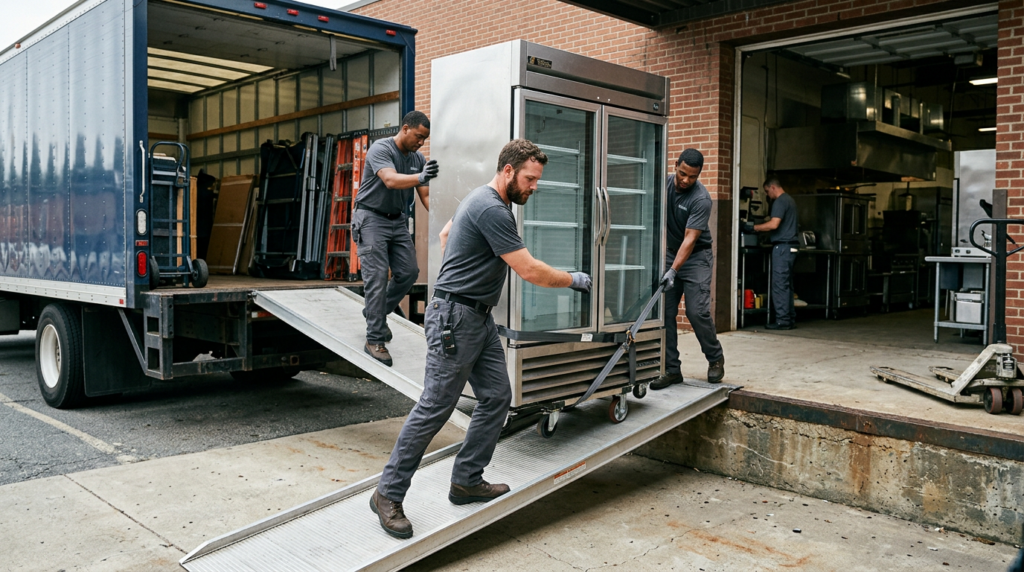
Commercial refrigerator movers are specialized relocation crews who plan, lift, protect, transport, and place heavy cooling equipment for businesses. The service covers reach-in refrigerators, prep tables, display cases, and other bulky units for restaurants, clinics, markets, offices, and labs that need equipment moved safely, without preventable damage or avoidable downtime.
Commercial refrigerator movers handle the full arc of a cooling-equipment relocation: measuring routes, protecting floors and doorways, rigging and lifting the unit, securing it for transport, and setting it in its new space. Crews typically move reach-in refrigerators and freezers, refrigerated prep tables, bakery display cases, undercounter units, and other bulky cooling equipment that is too heavy or awkward for general staff to handle safely. The work fits several common business situations, including a restaurant relocation, a clinic or pharmacy upgrade, a grocery expansion, an office kitchen remodel, and a laboratory move where temperature-sensitive storage cannot be down for long. Companies that provide commercial moving services, such as Mike Hammer Moving in the Kansas City area, typically coordinate the refrigerator move alongside the rest of the relocation so a kitchen or lab returns to service quickly. Because these units demand specialized rigging, heavy item movers near you plan the equipment and path protection each job requires. For moves that cross state lines, confirm the carrier holds active federal registration before signing anything.
- Measure the refrigerator's height, width, depth, and door swing, then compare those numbers with every doorway, hallway, and freight elevator on the route before scheduling.
- Clear shelves, trays, food, and loose parts before movers arrive so the unit is lighter, balanced, and free of items that could shift or spill.
- Check the appliance manual for power-down timing, door-securing steps, and upright transport instructions, since many manufacturers require units to stay vertical to protect the compressor.
- Plan perishable inventory around the downtime window by moving stock to a backup cooler or refrigerated truck while the unit is unplugged.
- Share site details in advance, including stairs, loading docks, and parking, so the crew arrives with the right dollies, straps, and floor protection. Our appliance moving guide covers the basics for any heavy cooling unit.
Rule of Thumb: Prepare the Unit and the Route
- Prepare the unit and the route before move day: measured openings, emptied shelves, and a powered-down refrigerator let the crew work safely without improvising.
- For moves that cross state lines, look up the carrier's U.S. DOT number in the FMCSA SAFER system before you sign anything.
- Kansas City businesses can request a free quote to confirm equipment size, building access, and scheduling.
|
Planning checkpoint |
Documented figure |
Trigger or condition |
Who should check it |
|---|---|---|---|
|
Weekend oversize width |
Up to 16 feet |
Missouri's current oversize rules allow loads up to but not exceeding 16 feet to travel on week ends ( Missouri oversize rules) |
Carriers hauling wide equipment on state highways |
|
Escort trigger for overlength loads |
Over 110 feet |
Escort requirements apply to overlength loads exceeding 110 feet ( Missouri escort rules) |
Crews moving extra-long equipment or trailers |
|
Driver licensing threshold |
GVWR of 26,001 pounds or more |
A CDL is required to operate any single vehicle with a GVWR of 26,001 pounds or more ( Missouri CDL manual) |
Drivers of heavy box trucks and rigging vehicles |
|
Interstate carrier verification |
Free one-carrier query |
The FMCSA SAFER Company Snapshot is available free of charge, with searches by DOT Number, MC/MX Number, or company name ( FMCSA SAFER) |
Businesses hiring a mover for a state-line crossing |
How Do Crews Move Commercial Refrigerators Safely?
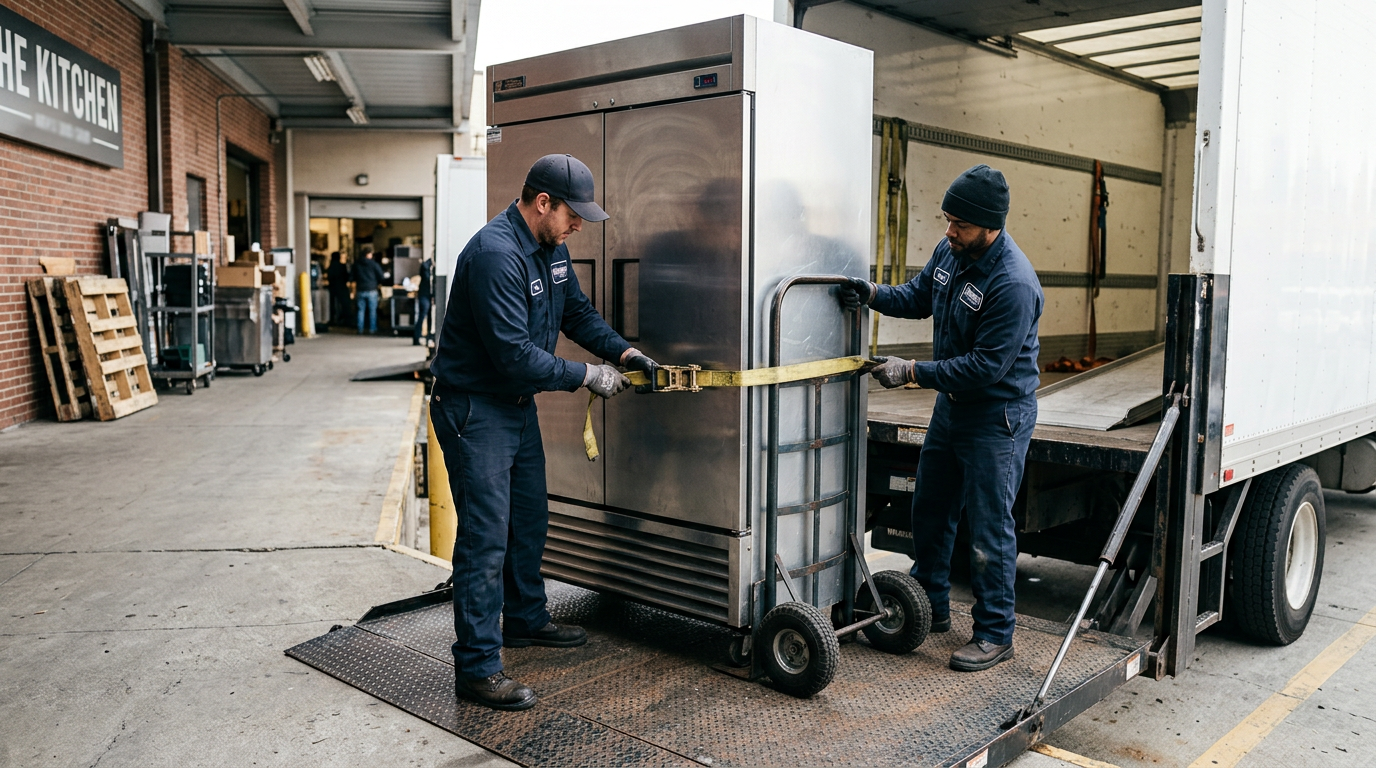
Safe commercial refrigerator moving works by controlling weight, temperature, doors, seals, and the travel path before any lifting begins. Experienced commercial refrigerator movers map tight turns, loading zones, ramps, and elevator access, and they routinely measure doorways and hallways so nothing is improvised on move day. Gear follows the size of the unit: specialized equipment such as appliance dollies, ratchet straps, lift gates, and moving blankets, with heavier or glass-fronted cases getting more padding, not less.
When a loaded rig exceeds Missouri's legal weight and size requirements, the carrier must obtain permits first, and those Oversize Overweight permits outline specific routes and special requirements the carrier must follow on the Missouri state highway system. Credentials matter too: per the state Commercial Driver License Manual, a CDL is required to operate any single vehicle with a GVWR of 26,001 pounds or more.
After placement, they inspect door gaskets, leveling feet, casters, and power cords, verify the refrigerator sits level, and coordinate moving office equipment when the reset is part of a larger relocation. Because a sealed, leveled, and checked unit is one the business can switch back on with confidence.
Quick Facts
- 1987 – year the family-owned company was founded
- 45 – trained, uniformed employees on staff
- 12 – company-owned trucks with direct, no-shared transport
- 50 – states covered for long-distance moves
- 100% – satisfaction guarantee on every move
Ready to Plan a Safer Move?
Hire professional commercial refrigerator movers when the unit is heavy, built-in, hard-wired, or tied to business downtime. Mike Hammer Moving's trained, uniformed crews haul equipment on dedicated trucks with no shared loads — from commercial refrigerators to hot tubs and other heavy specialty units; plan your move for a clear schedule.
Frequently Asked Questions About Commercial Refrigerator Movers
What should businesses confirm before booking commercial refrigerator movers?
Confirm timing, preparation, cost drivers, and service limits before moving day so the crew arrives ready to work. Clear answers help business owners avoid spoiled inventory, damaged equipment, and costly delays. The best next step is to verify appliance details, building access, and the written scope of service before you book, ideally during an on-site or video estimate. A trusted commercial moving team can confirm each of these details during the estimate.
Who empties, cleans, and secures the removable parts before the move?
Ask this directly during the estimate and get the answer in writing. Someone must remove all food and product, defrost and dry the cabinet, and take out or strap down shelves, racks, bins, and drawers so nothing shifts in transit. Confirm whether the moving crew handles this preparation or whether your staff must finish it before arrival, because an unprepared unit can spoil inventory and slow the entire job.
Do I need a licensed professional to disconnect and reconnect the unit?
Often, yes. A hardwired reach-in or walk-in usually calls for a licensed electrician to handle the power connection, and a system with refrigerant lines typically needs a certified HVAC/R technician to recover refrigerant, cap the lines, and restart the equipment. Movers generally transport the unit but do not perform electrical or refrigerant work, so line up those trades early and confirm who schedules each step.
Should I photograph the appliance before the crew begins?
Yes. Take dated photos and a short video of each unit from several angles, and note existing dents, scratches, cracks, and whether it still cools properly. This record protects you if a damage question arises later and helps verify the unit's condition at reinstallation. Share the images with the crew lead so both sides start from the same baseline.
Will an oversized unit need a highway permit?
It can. In Missouri, motor carriers that haul loads exceeding the state's legal weight and size requirements must obtain oversize overweight permits, per the Missouri Department of Transportation. A large walk-in case or compressor rack may cross those limits, so ask whether the load will require permitting and who arranges it before the truck is loaded.
How can I confirm the crew is credentialed to drive a large truck?
Ask about driver licensing. According to the commercial driver license rules published by the Missouri Department of Revenue, a driver must hold a CDL to operate any single vehicle with a gross vehicle weight rating of 26,001 pounds or more, which covers many fully loaded box trucks. A reputable mover, such as Mike Hammer Moving, can confirm its drivers hold the proper credentials and answer the rest of these questions before you hire commercial refrigerator movers. To lock in your details, get your free quote and review the written scope before moving day.
{
“@context”: “https://schema.org”,
“@type”: “FAQPage”,
“mainEntity”: [
{
“@type”: “Question”,
“name”: “What should businesses confirm before booking commercial refrigerator movers?”,
“acceptedAnswer”: {
“@type”: “Answer”,
“text”: “Confirm timing, preparation, cost drivers, and service limits before moving day so the crew arrives ready to work. Clear answers help business owners avoid spoiled inventory, damaged equipment, and costly delays. The best next step is to verify appliance details, building access, and the written scope of service before you book, ideally during an on-site or video estimate. A trusted commercial moving team can confirm each of these details during the estimate.”
}
},
{
“@type”: “Question”,
“name”: “Who empties, cleans, and secures the removable parts before the move?”,
“acceptedAnswer”: {
“@type”: “Answer”,
“text”: “Ask this directly during the estimate and get the answer in writing. Someone must remove all food and product, defrost and dry the cabinet, and take out or strap down shelves, racks, bins, and drawers so nothing shifts in transit. Confirm whether the moving crew handles this preparation or whether your staff must finish it before arrival, because an unprepared unit can spoil inventory and slow the entire job.”
}
},
{
“@type”: “Question”,
“name”: “Do I need a licensed professional to disconnect and reconnect the unit?”,
“acceptedAnswer”: {
“@type”: “Answer”,
“text”: “Often, yes. A hardwired reach-in or walk-in usually calls for a licensed electrician to handle the power connection, and a system with refrigerant lines typically needs a certified HVAC/R technician to recover refrigerant, cap the lines, and restart the equipment. Movers generally transport the unit but do not perform electrical or refrigerant work, so line up those trades early and confirm who schedules each step.”
}
},
{
“@type”: “Question”,
“name”: “Should I photograph the appliance before the crew begins?”,
“acceptedAnswer”: {
“@type”: “Answer”,
“text”: “Yes. Take dated photos and a short video of each unit from several angles, and note existing dents, scratches, cracks, and whether it still cools properly. This record protects you if a damage question arises later and helps verify the unit’s condition at reinstallation. Share the images with the crew lead so both sides start from the same baseline.”
}
},
{
“@type”: “Question”,
“name”: “Will an oversized unit need a highway permit?”,
“acceptedAnswer”: {
“@type”: “Answer”,
“text”: “It can. In Missouri, motor carriers that haul loads exceeding the state’s legal weight and size requirements must obtain oversize overweight permits, per the Missouri Department of Transportation. A large walk-in case or compressor rack may cross those limits, so ask whether the load will require permitting and who arranges it before the truck is loaded.”
}
},
{
“@type”: “Question”,
“name”: “How can I confirm the crew is credentialed to drive a large truck?”,
“acceptedAnswer”: {
“@type”: “Answer”,
“text”: “Ask about driver licensing. According to the commercial driver license rules published by the Missouri Department of Revenue, a driver must hold a CDL to operate any single vehicle with a gross vehicle weight rating of 26,001 pounds or more, which covers many fully loaded box trucks. A reputable mover, such as Mike Hammer Moving, can confirm its drivers hold the proper credentials and answer the rest of these questions before you hire commercial refrigerator movers. To lock in your details, get your free quote and review the written scope before moving day.”
}
}
]
}